
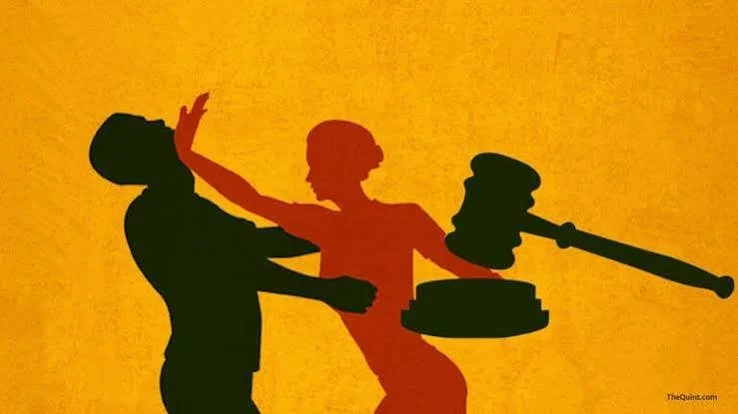
Absence of Legal Recognition
The Indian Constitution, particularly Articles 14, 15, and 21, along with international human rights instruments such as the Universal Declaration of Human Rights (UDHR), the International Covenant on Civil and Political Rights (ICCPR), and the Convention on the Elimination of All Forms of Discrimination Against Women (CEDAW, recognizes every individual's right to protection against sadistic, inhumane, and degrading treatment and enforces an emphasis on every individual’s right to live with dignity, justice, and legal aid. While the heinous act of rape is criminalized outside of marriage in our nation, India’s legal framework, through Exception 2 to Section 63 of the BNS, explicitly exempts sexual intercourse by a husband with his own wife, where the wife is not under 18, from the definition of rape. This position has also been reflected in judicial decisions. One such instance is Nimeshbhai Bharatbhai Desai v. State of Gujarat (2018), in which the Gujarat High Court strongly rejected the notion of “implied consent” within marriage and emphasised that marriage does not grant a husband unrestricted sexual entitlement over his wife. However, due to the marital rape exception under Section 375 of the then applicable IPC, the Court held that the husband could not be prosecuted for rape under Section 376, although other applicable offences could still be invoked for certain non-consensual sexual acts. In this context, the provision may reinforce perceptions of sexual entitlement within marriage, thereby undermining the recognition of wives as autonomous individuals with the right to refuse sexual activity.
A systematic review reported that marital rape survivors experienced significantly higher rates of clinical depression (7 of 8 studies) and increased PTSD symptoms. One qualitative study concluded:
“…sexual violence in marital relationships is one of the most privatized and least addressed forms of violence… underscoring profound emotional consequences”.
Data derived from hospital and counseling service records in Indian cities reveal that while many women disclose forced sex under the broader category of intimate partner violence, very few report marital rape specifically. The general definition of marital rape as a private or non-criminal issue can lead to its marginalization in health care environments, where lack of protocols and trauma-informed training can further perpetuate survivors' sense of psychological invalidation.
Cultural Victim Blaming
In India, marriage is considered a sacred and culturally idealized institution, which can contribute to social condemnation, disbelief, and stigma towards survivors of marital rape. These responses can invalidate their experiences and discourage help-seeking.
The deeply held belief that marriage implies permanent consent means many consider a wife’s resistance as irrational and illegitimate. An article observed that marriage is seen as “an unbreakable tie, which confers the right to engage in sexual activity” with implied consent, even when not freely given. This perception supports the narratives of victim-blaming and silences survivors.
Studies show gross under-reporting due to shame and concerns for family honor. A study revealed that in Gujarat and West Bengal, women were reluctant to report forced sex unless physical violence was present. The pervasive fear of public shame or dishonoring the family highly discourages and suppresses survivors from seeking support.
Social and Institutional Invalidation
The lack of formal recognition leads survivors to feel delegitimized. A review noted that in both healthcare and legal settings, forced sex within marriage is often categorized under the broader label of “intimate partner violence,” rather than being addressed explicitly as marital rape. This generalization makes it harder for survivors to receive the specialized psychological support and interventions they truly need.
When survivors internalize societal judgments, being labeled "defiant" or "a bad wife," they often experience guilt, self-blame, anxiety, depression, and a fear of social shunning. While research specific to the Indian context is limited, global studies on intimate partner violence consistently show that when survivors feel dismissed or disbelieved by those around them, their trauma often deepens, making the path to psychological recovery even more difficult.
Lack of Trauma-Informed Support
Despite the significant psychological consequences of sexual violence within marriage, survivors in India often face substantial barriers to accessing appropriate, sensitive, and specialised healthcare and psychosocial support. Sexual violence in marriage may not be routinely identified or asked about by healthcare professionals, especially when sexual violence is considered a private or family matter. In Maharashtra, research has revealed that there are gaps in the knowledge, preparedness and capacity of healthcare providers to identify and respond to violence against women, and that training and health-system interventions enhance providers' capacity to identify violence and offer appropriate support. These gaps are especially important because survivors might not report psychological or physical health issues if they do not explicitly mention the violence they have endured.
This institutional neglect is in the legal domain as well. Survivors are often disbelieved or turned away by police and legal professionals, who either fail to register complaints or dismiss the violence as a “private matter”. This reinforces the survivor’s sense of invisibility and can result in what scholars describe as “institutional betrayal trauma,” where the very systems meant to protect instead deepen harm.
Moreover, state-sponsored mental health programs and NGOs frequently lack dedicated services for survivors of marital rape. Many shelters and helplines cater broadly to victims of domestic abuse but do not offer therapeutic interventions specifically designed to address sexual violence in intimate relationships. This gap increases the emotional burden of the survivor, which can result in heightened anxiety, depression, and PTSD, and is worsened by the survivor's awareness that their suffering is not legally recognized or socially acknowledged.
The recognition of marital rape as a crime is not only a legal obligation, but also a crucial step towards safeguarding the mental health and human dignity of survivors, challenging the social norms that normalise marital sexual violence, and enhancing institutional accountability and survivor-centred support systems. To create real change, legal reform must be supported by better mental health services, professional training, and a shift in public attitudes that prioritise the rights and recovery of survivors.
Ria Damani
