
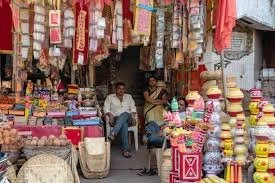
Walk into a small kirana store in India today and chances are you’ll see a QR code near the counter. This wasn’t the case just a few years ago, almost every transaction happened in cash. But with the rise of digital payments, the way these tiny stores do business has undergone quite a transformation.
The cash-only system worked but it wasn’t smooth. Getting change for Rs. 500 was a daily headache. And because everything stayed in cash there was no digital record of the income. Many shopkeepers had to depend on local moneylenders or suppliers who often charged high interest rates. As a result kirana stores faced a credit gap running into lakhs and crores.
Before digital payments every aspect of business was cash dominant
Customers paid in notes and coins and shopkeepers used to note all payments in the notebook. This worked for years but it had many inefficiencies. Finding change was a daily struggle and many shopkeepers also struggled with getting loans. More importantly, shopkeepers who dealt only in cash had no digital financial footprint. This made it difficult for them to get formal loans from banks and NBFCs.
According to a recent article, India’s kirana store segment has a credit gap of nearly Rs.20 lakh Cr, largely because many stores still rely on informal lending channels like local moneylenders or suppliers. Since everything was noted manually in physical registers, withdrawing or depositing money often required store owners stepping away from shops. For small stores run by single people, this could mean standing in long queues, wasted hours, and lost business especially by small shops run by single people.
The Digital Payment Boom
In November 2016, India witnessed a financial shock that went on to reshape how millions transact every day. Initially, for customers and shopkeepers it was chaos. The government’s decision to demonetize ₹500 and ₹1,000 currency notes left citizens scrambling for cash overnight. What began as chaos soon triggered a transformation: demonetization created the push for people to experiment with digital payments, and at the heart of this shift was UPI (Unified Interface Payments).
Until then, cash was king. From tea stalls to kirana stores, transactions depended heavily on physical currency. UPI launched just a few months earlier in April 2016 and it suddenly became a lifeline. While UPI was the engine, it needed platforms to reach the masses. That’s where platforms like PhonePe, Paytm, and BharatPe stepped in, turning a government-backed infrastructure into a daily habit for millions. According to the Reserve Bank of India, UPI transactions jumped from just ₹3.8 crore in October 2016 to over ₹24 lakh crore by August 2025. Even those who had never used a smartphone were guided by friends, family or even customers to set up digital wallets. From negligible transactions, today UPI handles transactions worth lakhs of crores every single month.
For countless kirana store owners, the shift to digital payments have brought a wave of practical, everyday benefits. Faster transactions means that a quick scan or tap, payments now land directly into the shop owners account within seconds. Digital payments have potential to speed up transactions, which may reduce queues and waiting times. This can make the overall shopping experience smoother and potentially improve customer satisfaction, encouraging repeat visits. Digital record keeping is another possible advantage. Since each transaction is automatically logged, shopkeepers may be able to maintain daily sales records with less effort. These records could help with inventory management, simplify tax calculations and provide the documentation needed to apply for small business loans by demonstrating proof of income. During Covid-19, digital payments became key for daily necessary things. Contactless QR code payments allowed customers to shop for essentials while maintaining social distance.
Challenges in the Digital Shift
While digital payments have opened new doors for kirana stores, the transition hasn’t been smoother.
For older shopkeepers digital literacy has been a hurdle. Many were unfamiliar with the smartphones and payments apps when the first arrived on the screen. Some picked them up quickly while some of them were dependent on their family members to help them to understand how to read payment notifications, check balances etc. For them, this shift has meant learning a new chapter in the business.
Connectivity has been another challenge especially in smaller towns and rural areas. Even the best technology can’t work without a stable signal. Weak networks often lead to failed transactions, delay and interruptions in payments. On the top, payment glitches occasionally add to the tension. Some payments fail midway and money gets debited from the account of the customer but doesn’t show up in the shopkeeper's account. This can lead to awkward arguments or mistrust, with some customers walking away assuming it will reflect in the account.
A Changed Landscape: How Kirana Stores Are Evolving
But the transformation goes beyond payments. Many shopkeepers now take orders via WhatsApp, a far cry from the days when you had to walk down in person for every small purchase. Customers simply send their grocery list over chat, the shopkeeper packs the order, and payment is made online before delivery or pickup. This low-cost, easy-to-use solution proved especially valuable during lockdowns, when safety and convenience were top priorities.
Perhaps the biggest leap has come from integration with e-commerce and delivery platforms. For instance, JioMart partners with local kirana stores, helping them digitize their product catalogues, manage orders, and deliver goods locally, all while keeping control of their operations. Similarly, Flipkart Wholesale allows these stores to source inventory online, benefit from bulk discounts, and streamline their supply chain. In short, the modern kirana store is no longer just a cash, counter, and ledger operation, it's a hybrid neighbourhood business blending personal relationships with the power of technology. And that blend seems to be the winning formula for the next chapter of India’s retail story.
Samata Mhaskar
