
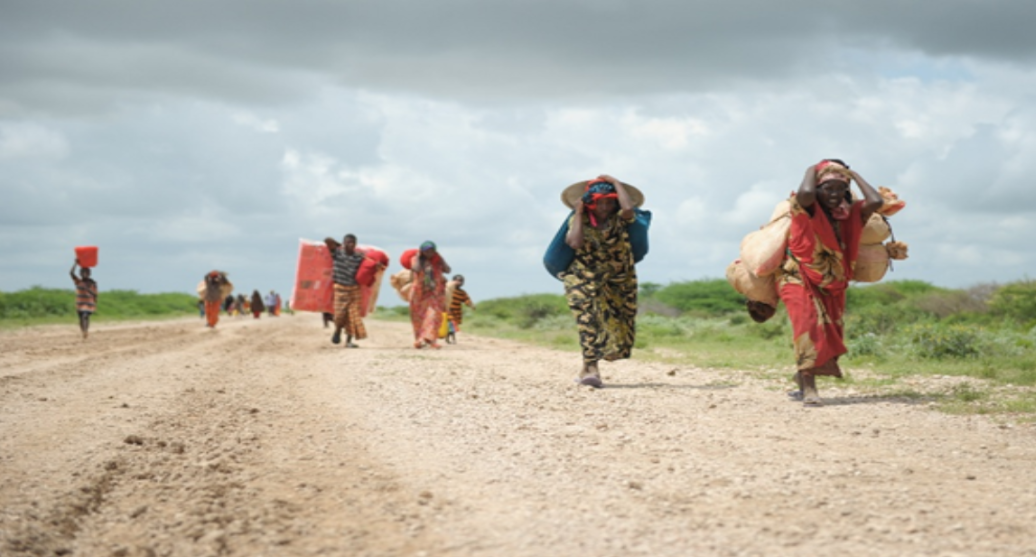
India has a long coastline of about 7,516 kilometres, home to millions who depend on fishing, farming, and coastal trade for survival. The sea level rise is no longer a projection but a lived reality, and it is being felt every day. Shorelines are shrinking, wells are turning salty, and homes are being rebuilt farther away from the waves. Climate change, once seemed like a scientific term, now feels very close and real.
Global warming causes sea levels to rise in two primary ways: (1) thermal expansion of warming seawater and (2) melting of glaciers and ice sheets. Global temperatures have increased by about 1.5°C above pre-industrial times. Warmer seawater expands, and melting glaciers add more water to the oceans, resulting in sea-level rise. The Intergovernmental Panel on Climate Change (IPCC) warns that seas will continue to rise throughout this century under all emission conditions. A recent assessment by the National Centre for Coastal Research (NCCR) found that nearly 33.6% of India’s coastline is eroding, while only 26.9% shows signs of expanding. In Kerala’s Ernakulam district alone, the coast has reportedly lost around 25% of its shoreline in the past 35 years. Repeated tidal onslaughts have forced entire families in coastal Karnataka’s Ullal region to abandon their homes. These are not isolated events, but they unfold the real face of a global phenomenon.
The 2014 documentary Thirty Million, directed by Daniel Price, captures a similar crisis in Bangladesh. In a country where nearly 150 million people depend on agriculture, the sea is making its way inland through saline water intrusion and rising tides. Saline water entering from the sea into rivers and farmlands has destroyed crops, contaminated drinking water, and rendered fertile lands. Farmers, especially rice cultivators, struggle to grow food as salinity spreads across the delta region. Scientists are now experimenting with saline-resistant seeds, but even they admit that adaptation has its limits. By the end of this century, the sea level is expected to rise by about one metre, threatening to displace nearly thirty million people in Bangladesh alone. The film leaves viewers with one haunting question: “Where will all these people go?”
But Bangladesh is not alone in this struggle. Climate change is a global crisis that spares no border, but its consequences fall hardest on low-lying and low-income countries that have contributed the least to the problem. The UNDP’s coastal afforestation programme in Bangladesh and other local environmental programs such as BRAC’s Climate Change Programme are already working with vulnerable communities to build resilience, restore mangroves, and adapt livelihoods to changing coastal conditions. Still, these efforts are not enough without global solidarity.
In India too, the consequences of sea-level rise go beyond disappearing beaches. Low-lying agricultural lands in states like Odisha, West Bengal, and Andhra Pradesh are seeing a decline in crop yields as the soil becomes salt-laden. Families that have lived by the sea for generations now have to make a choice between staying in place and risking everything or moving inland to uncertain futures. Such displacements go unrecorded, leaving the affected without formal recognition or support.
As coastal communities move inland, many settle in the outskirts of cities or in slums, seeking work in construction, domestic labour, or small industries to survive. This migration adds pressure to already strained housing, sanitation, and health systems in urban areas. Coastal Cities are witnessing a dual burden, coping with incoming migrants while battling their own climate risks. The absence of inclusive urban planning or recognition of “climate migrants” exacerbates inequality, leaving many without proper shelter or social protection. Therefore, the story of rising seas is also a story of reshaping cities and redefining belonging.
The warming of oceans and changing wind patterns together have intensified cyclones and extreme rainfall events along India’s eastern and western coasts. In recent years, cyclones such as Amphan (2020), Tauktae (2021), and Biparjoy (2023) have caused massive flooding, destruction of coastal infrastructure, and salt contamination of farmlands. According to the Indian Meteorological Department (IMD), the Arabian Sea has seen a sharp increase in the number of severe cyclones over recent decades, largely due to warming sea-surface temperatures. These disasters are not separate from sea-level rise; they are its most visible and violent outcomes.
Sea-level rise is itself caused by greenhouse gas emissions, and every tonne of carbon dioxide we release into the atmosphere adds more heat to the planet. India’s own coastal adaptation efforts have been uneven but instructive. For instance, mangrove restoration projects in the Sundarbans and Gujarat’s Gulf of Kachchh show that natural barriers can significantly reduce erosion and storm surges.
At the global level, the climate crisis requires cooperation among nations. The Paris Agreement’s goal to limit warming to 1.5°C still has hope, but a huge gap exists between what nations promise to do and what they actually implement. Wealthier nations must fulfil climate finance promises to help vulnerable regions adapt and build resilience. Equally important is the need for bigger structural changes. This includes moving away from fossil fuels, expanding renewable energy, improving coastal infrastructure, planning our cities with climate risks in mind, and protecting ecosystems like mangroves and wetlands. In the end, how fast and how far sea levels will rise depend on how quickly governments, industries, and global institutions act to make these changes and ensure climate justice.
Gorla Sravani
