
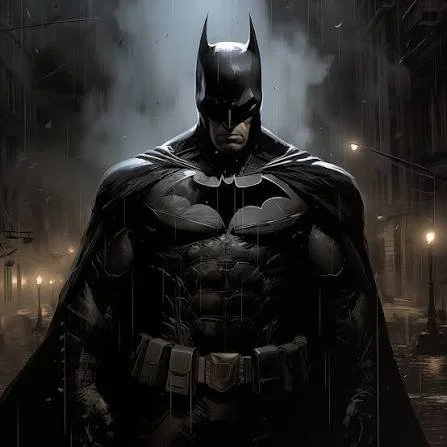
Batman is more than a superhero; he is a cultural mirror that has reflected more than eighty years of shifting societal ideologies. From the campy, gadget-laden detective of the 1960s to the brutal, rain-soaked vigilante of 2022, the Dark Knight has demonstrated an incredible ability to change with the times while somehow keeping his "core" intact. For over eight decades, Batman has remained one of the most adaptable characters in popular culture.
But how does a character who varies so radically remain recognizable as the same person? To understand this, we have to look at Batman as a prime example of transfictionality. In simple terms, this is the process where a single character or world "migrates" across many different, independent stories and media forms. Because Batman is not tied to one single "true" story, he exists as a "separable being" in our collective imagination, with few basic core traits like bat themed persona, the loss of his parents and justice over death attitude towards his villains. This allows him to act as a blank slate on which society projects its evolving convictions regarding justice, violence, and identity. He is not merely a single character but a global transmedia character network where vastly different versions coexist in a state of narrative multiplicity; the simultaneous existence of multiple, often contradictory, versions of the same character across separate universes.
Batman’s inception in May 1939 reflected a world grappling with the tail end of the Great Depression and the shadow of looming global conflict. Initially conceived by Bob Kane and Bill Finger, the character was a menacing outlaw whose world was constructed using the visual language of German Expressionist film. This early "noir style" utilized brooding shadows and contrast to express the unbalanced mental states of the character.
In his early years on television, Batman was often portrayed as a homo faber—a "man of the making" who used gadgets and science to impose order on a chaotic city; the character underwent a significant shift toward humanization to ward off moral panics regarding his perceived deviance. This era, exemplified by Adam West’s 1966 portrayal, embodied first modernity - a period defined by a confidence in occidental rationality and the belief that the world was ordered, rational, and governed by stable bureaucracy.
The transition in the late 1980s saw authors like Frank Miller refashion Batman into a character facing a perpetual identity crisis. This was the dawn of risk fiction, where Batman acted as a risk-manager navigating a "world risk society." Miller’s Batman in The Dark Knight Returns performed masculinity through edgework, voluntary risk-taking at the very edge of death—which may mirror national anxieties regarding the perceived failure of institutional systems to protect citizens during the Cold War.
Soon after, the 1990s introduced the concept of stylistic synchronicity. Tim Burton’s Gothic noir vision was unified across films, television, and consumer products. This period marked a move toward brand convergence, where the character became a coherent transmedia brand designed to appeal to both adult and child demographics by providing a reassuring continuity amidst global historical shifts. The character began to be managed as a serial figure defined by repetitions, revisions, and reboots.
Matt Reeves’ The Batman from 2022 offers a sophisticated depiction of a fractured psyche, where the ego must mediate between unresolved childhood trauma and moral duty. This version of Bruce Wayne is a dark empath who compartmentalizes his emotions to justify his mission.
Unlike the ordered hero of the 1960s, this iteration explores the psychological cost of being a vigilante. His journey from a person seeking "vengeance" to a symbol of hope mirrors contemporary societal concerns regarding mental health awareness.
Now, the question remains: how can we have a theatrical detective, a grim avenger, and a Lego figure and still call them all "Batman"? Academic theory explains this through a Type/Token framework.
Think of Batman as an abstract "Type", this is the master blueprint or "rulebook" of the character. This rulebook contains what scholars call "minimal components": the tragic origin story (the murder of his parents), the lack of superpowers, extreme wealth, and the use of the bat-motif. Specific portrayals, like those of Adam West or Robert Pattinson, are "Tokens" individual buildings constructed from that master blueprint. As long as the specific "Token" on our screen follows the essential rules of the master "Type," we recognize him as Batman. If an author tried to make Batman an obviously absurd case- say a white dog, the audience would judge it as "incorrect" because it fails to meet the basic standards of the character's identity established in the master blueprint.
Furthermore, names like "Batman" act as rigid designators that attach to an individual regardless of changing properties across different character templates. Sameness is a referential and social fact; Batman remains the same because subsequent authors intend to refer back to the artifactual continuity established in 1939. Crucially, these rules aren't set in stone. Through a feedback phenomenon, strong new versions of the character can actually update the master blueprint for future authors. When a version like Robert Pattinson’s introduces a new layer of psychological depth, it updates our collective "rulebook" for what a modern Batman should be.
Hence, Batman continues to evolve because his mythos is inexhaustible. He is a serial figure built for recontextualization, a character who survives not by staying the same, but by changing in ways that remain plausible to human nature.
Sarang Kulkarni
