
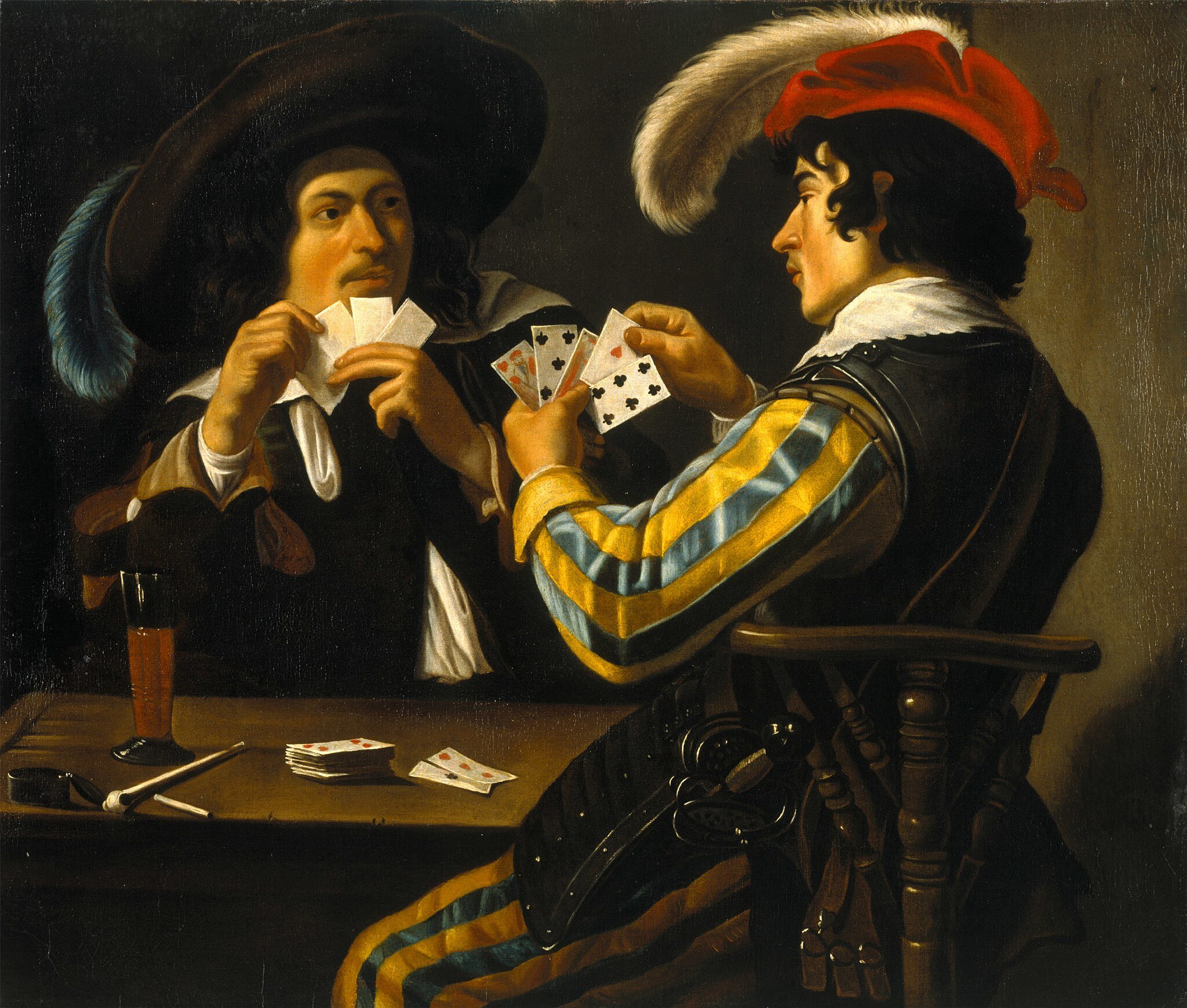
How can one come up with good ideas to do bad things? While creativity is often celebrated as a positive attribute, someone can use the same creativity toward self-interested and malevolent ends. Being darkly creative can occur in a wide variety of contexts, from schools to workplaces. A sales agent can resort to novel, underhanded tactics to meet their sales goals, even though such methods may result in fewer returning customers. Dark creativity could then explain why some relationships, especially from the perspective of economics, suffer from members acting in a misaligned or malevolent manner.
George Akerlof in ‘The Market for Lemons’ outlined how important information is for economic transactions. Every transaction is made on the basis of information available to market participants; however, not all information is visible to all participants. When market transactions occur in such conditions of imperfect information, where one party to the transaction benefits at the cost of the other due to information only that they are aware of, we have what is known as the hidden information problem (also known as adverse selection).
An example of this is when doctors, lawyers, or other professionals in key fields use their domain expertise to sell clients on services that they might not really need just because it is profitable for professionals to do so. Researchers in the US modelling maternal healthcare found that all else being equal, medical professionals were more likely to recommend C-sections when there was a financial incentive to do so, and when the patient was less informed about such decisions.
Another way information asymmetry manifests is the lack of information on how someone might act after entering into an agreement or formal contract, i.e. the hidden action problem (or moral hazard). Most often, the 2008 financial crisis is brought up as an example of the hidden action problem. People have argued that financial institutions acted in a more risky manner due to the existence of deposit insurance and bailouts. Had those providing the money for the insurance and bailouts known the future actions of these institutions, they would likely have provided the aforementioned facilities on more stringent terms.
We can observe these information asymmetry problems in other microeconomic relationships as well, for example, between principals and agents. A principal-agent relationship is one where the principal is someone who wants to get a task done, one that they themselves cannot get done either due to lack of knowledge or time, and where the agent performs said task in return for remuneration of some kind.
A characteristic of this dynamic is that due to the personal costs of putting in their own effort, agents may undertake actions that are not aligned with the principal’s goals. For example, a sales agent hired to sell products might occasionally put in less effort and attribute lower sales to poor demand. Such problems arise because the principal might not have information, either about the agent’s prior skills and how competent they might be (hidden information), or about how the agent might act after being hired (hidden action).
This lack of information or incomplete and ambiguous information forms one of the contexts where dark creativity can abound, coupled with bad intentions. Though parties engaging in transactions and contracts might have less of an ability to assess the intentions of the counterparty, they do possess the ability to decide how much ambiguity can exist, particularly in contracts, through the setting of provisions and contingencies.
Akerlof hypothesized that information asymmetry problems would ultimately lead to a situation where no transactions take place. A grim prediction, one that is not typically borne out in the data since many markets continue to operate in the presence of such information asymmetries. One might presume that we have found ways to eliminate—or at least minimize the problem of information asymmetry. Cumulative work on principal-agent relationships has identified both incentive-based and alternative methods of coordinating work depending upon the context. Some rely on monitoring the agent’s efforts while others rely on some level of cooperation between the principal and the agent.
But these are not without their drawbacks, such as attempts to influence the monitoring apparatus or shirking in the short-run within co-operative arrangements. Further, there is a gap between what models suggest and what reality actually is—reality which tends to be a lot simpler than what theoretical economic models can predict, as pointed out by economist Kenneth Arrow. Complex fee schedules, something that models suggest should be the case, are not as common as they should be; which Arrow theorises is due to the costs involved in negotiating and enforcing such contracts.
As modern economies become ever increasingly specialised, automated, and oriented towards the service sector; we might see more ambiguity injected into everyday economic relationships. Advances in automation, in particular, may cause structural changes that cause some roles to become redundant while augmenting others. As these roles change, so should our understanding—ideally from an inter-disciplinary perspective—of how best to coordinate work and minimise ambiguity. Otherwise, we may allow systems that are poorly equipped to coordinate work, that allow for information asymmetry, and thus ambiguity that can be exploited by bad actors, creatively.
Abhishek Vajjala and Hansika Kapoor
