
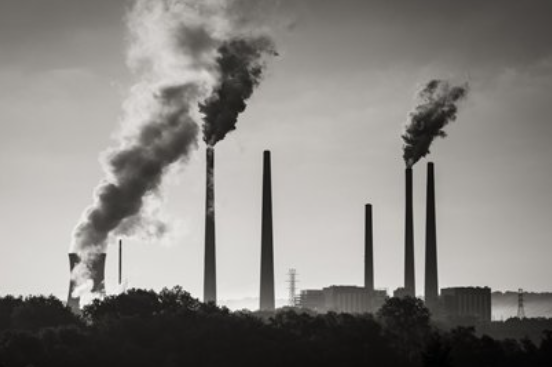
On the 2nd of September, the United Nations Environment Programme (UNEP) officially declared that the world is set to experience an increase of over 1.5°C above pre-industrial temperatures. This 1.5°C limit is a central goal of the Paris Agreement and crossing it is likely to have massive ramifications on the planet as a whole. These include the melting of ice sheets, reduced water availability, ecosystem changes, widespread increase in mortality, and more. There are also major economic costs, but given the escalating nature of climate disasters and uncertainties over how they will play out, an exact calculation of future costs is incredibly challenging. Despite this however, using estimates for past damages caused by climate change gives us an estimation of how much worse future effects will be.
A study published in 2023 estimated that climate change cost the world at least $2.86 trillion from 2000-2019, with an hourly cost exceeding $16.3 million and a human cost of around 60,951 lives i.e. more than one life lost every three hours. While the past state of events was quite bleak, worsening climate change is likely to lead to even worse outcomes. It is estimated that the future damages of climate change will be even higher with damages by 2050 totalling between $1.7 - $3.1 Trillion per year. This would mean the annual cost of climate change would be 12 to 22 times higher than the average for the 2000-2019 period.
These numbers are so large that it is quite easy to ignore their scale and push them off as we assume someone else will pay them. Unfortunately, that is not the case; climate change is a problem that impacts us all, and costs us all. A paper from 2020 has shown that due to the damage done by climate change, governments have to increase taxes to pay for the repairs needed due to wildfires, floods, and other natural disasters. Climate change also damages crops, reduces yields, and disrupts supply chains, resulting in increased costs of food. This increase in taxation, as well as food inflation is a price that we are actively bearing, meaning that climate change is effectively being paid for by us, and quite directly at that.
To make matters worse, we don’t only pay for climate change once it happens, we actually also pay to make it happen. To understand this, we must understand that the primary cause of climate change is carbon emissions from the burning of fossil fuels to generate power. The fossil fuel industry is actually a recipient of a massive amount of subsidies globally.
The IMF states that fossil fuel subsidies in 2024 totalled $0.73 trillion in explicit subsidies, and another $6.7 trillion in implicit subsidies, totalling almost $7.5 trillion in one year alone. This is the equivalent of nearly 6.5% of global GDP. These subsidies come from our taxes, meaning we are paying to subsidize this industry, to emit carbon, and thus to fuel climate change. Explicit subsidies come in the form of direct budgetary transfer, tax breaks, price caps, and preferential finance or regulated tariffs. In India specifically, the majority of fossil fuel subsidies comes in the form of Liquefied Petroleum Gas (LPG) consumer subsidies, totalling over 10,000 crore rupees ($1.04 billion) per year.
It is a shocking thought that we are actively subsidizing the very thing that is likely to cost us our future. The scale of it means that every hour $856 million are spent on fossil fuel subsidies. When that is added to the previously mentioned $16 million hourly cost of climate change related damage, this problem costs us over $870 million an hour. Furthermore, the estimates for damage caused is likely an underestimate due to data quality and coverage; and given that climate change damages are likely to increase significantly, we are bound to see this figure rise, and very noticeably at that. There is one last matter to be considered however, when we are looking at the true costs of climate change, and that is the alternatives.
The major alternatives to natural gas and fossil fuel powered energy are nuclear and renewables. While nuclear energy’s growth has been slow, renewables have experienced rapid growth over the past few years. Solar energy generation rose from 256 TWh in 2015 to 2779 TWh in 2025, marking a 986% increase, with wind energy going from 830 TWh to 2713 TWh in the same period, a 227% increase. Renewables as a whole, which include bioenergy, hydropower and other renewables, had an overall increase of nearly 95% in 10 years, with fossil fuels growing less than 11% in the same time period. In fact, clean power actually met all the power demand growth for 2025, keeping fossil fuel production flat. This is a very promising sign for the future of renewables.
In addition to the production statistics, another key aspect of this matter is the fact that power from new-build renewables costs less than new-build energy from fossil fuels. Combined with clean energy’s efficiency increases, the gap between the cost to produce renewable energy and fossil fuel energy is set to increase over time as well. The big caveat is all of this only applies to unsubsidized energy. Overall, fossil fuel energy is cheaper today precisely because of the trillions of dollars spent per year to subsidize it. Power from renewables costs less when excluding subsidies offered to both renewables and non-renewables.
Climate change is already a problem we are literally paying for due to the damage it is causing. We should certainly not be subsidizing it and paying to make it worse. The costs are very real, and we are bearing them in real time. Expanding renewable energy can therefore play an important role in reducing emissions, while technological improvements and falling generation costs provide an increasingly strong economic case for the transition.
Alcuin Moras
